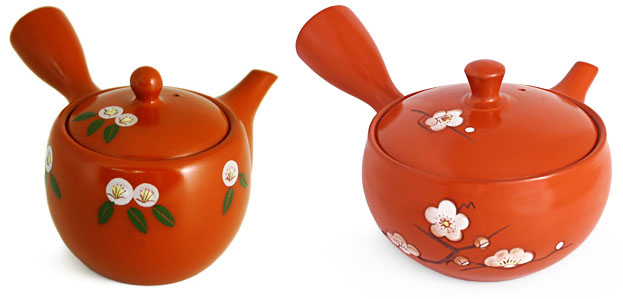
A Tokoname kyusu is more than a small Japanese teapot. Its iron-rich clay, carefully fitted lid, integrated tea filter and controlled pour reflect generations of practical ceramic design. If you love Japanese green tea, these details help explain why Tokoname, in Aichi Prefecture, has become synonymous with the side-handled kyusu.


This guide explores what makes a Tokoname teapot distinctive, how to choose one, how to brew with it, and where to discover the craft in person. We distinguish established craft techniques from taste claims that are traditional or anecdotal rather than scientifically proven.
Watch a Tokoname Master Shape a Kyusu
This demonstration by Tokoname artisan Genji Shimizu shows the nakabiki wheel technique, in which the body, spout and handle are formed successively from a large mass of clay. Watch the hands and wheel speed as the shapes emerge. Video published by the Tokoname Ware Portal, operated by the Tokoname Chamber of Commerce and Industry. Original publisher information. Watch on YouTube.
1. Why Tokoname Became a Teapot Town
Tokoname is one of Japan’s Six Ancient Kilns, with pottery production dating to the early twelfth century. Its workshops originally made large storage jars and everyday ceramic vessels. During the nineteenth century, techniques influenced by Chinese teapots helped establish the red-clay kyusu that is now one of the town’s signature products.
This history matters because a Tokoname kyusu is not simply a souvenir with a traditional appearance. It is a functional object developed within a long-running manufacturing community, where clay preparation, shaping, firing, and finishing techniques were continually refined.
2. Shudei: The Iron-Rich Red Clay
Shudei (朱泥) means vermilion or red clay. Tokoname’s iron-bearing clay is associated with the warm reddish-brown color of many traditional kyusu. Some pieces are unglazed on the inside, leaving the fired clay surface in contact with the tea. Tokoname makers also produce black, patterned and other colored teapots; not every authentic Tokoname kyusu is bright red.
Local tourism materials say that tea brewed in iron-rich Tokoname clay may taste less astringent or more mellow. This is a longstanding part of the region’s tea culture, but it should not be read as a guarantee that every teapot chemically improves every tea. Water, leaf quality, temperature, brewing time and personal preference all affect the result.
3. The Lid: A Tiny Detail That Reveals Craftsmanship
Look closely at the lid and rim. A well-made kyusu is designed so the lid sits neatly on the body. Makers may refine the contact surfaces through suriawase, a careful grinding or fitting process. The aim is a smooth, secure fit during brewing and pouring, not an impossibly airtight seal.
When handling a teapot in a shop, gently check whether the lid sits evenly and feels stable. A tiny amount of movement does not automatically mean poor quality; judge the complete fit and function rather than demanding an arbitrary perfection test.
4. The Side Handle: Designed for Pouring
The classic yokode kyusu has a handle on the side, commonly positioned roughly at a right angle to the spout. This design allows a comfortable wrist movement when pouring into small tea cups. It is especially practical for the multiple short infusions common in Japanese green-tea preparation.
Not every kyusu uses a side handle: Japanese teapots also come with rear handles or overhead handles. Choose the form that suits your grip, cup size and brewing habits.
5. Inside the Pot: Ceramic Filters and Leaf Space
A filter keeps tea leaves in the pot while the infusion flows into the cup. Tokoname kyusu can use an integrated ceramic filter, sometimes described as ceramesh, or a different filter construction. The size and distribution of holes matter: fine Japanese green-tea particles can pass through some filters, while an overly restrictive filter may clog.
Before buying, inspect the filter and ask whether it suits the tea you usually drink. A wide opening also makes it easier to rinse out spent leaves. A smooth, controlled pour and a spout that stops dripping cleanly are practical qualities worth prioritizing.
6. Handmade Versus Mold-Made: What Should You Buy?
Tokoname teapots range from affordable everyday pieces to individually made works by specialist potters. Some are wheel-thrown; others use plaster molds or other production methods. Handmade is not automatically better for your daily tea, and mold-made does not mean inauthentic. What matters is the workmanship, the filter, the lid fit, the pour, the capacity and whether you enjoy using the object.
If buying in person, ask for the maker’s name, production method and care guidance. A trustworthy shop should be able to explain the differences without claiming that one material or method is universally superior.
7. How to Choose Your First Tokoname Kyusu
Capacity: Think about how many people you serve and the size of your cups. A compact teapot can be ideal for one or two people; larger vessels are useful for groups. Remember that the stated capacity is not always the most comfortable brewing volume.
Filter: Match the strainer to your preferred tea. Finely broken or deep-steamed leaves may require a different filter than large, intact leaves.
Handling: Hold the empty pot to check the balance, handle angle and weight. Ask the shop to demonstrate the pour with water when possible.
Finish: Decide whether you prefer classic unglazed shudei, a dark finish or a contemporary decorated piece. The aesthetic choice is personal; origin and construction matter more than color alone.
Budget: Compare the maker, build quality and functionality rather than using price as a shortcut for authenticity. If purchasing overseas, also check shipping costs, import taxes and breakage protection.
8. How to Brew Japanese Green Tea in a Kyusu
Start with the tea producer’s recommended leaf quantity, water temperature and infusion time. As a practical example, many sencha teas are brewed with water cooler than boiling; delicate teas can require lower temperatures. Put the leaves into the kyusu, add water, steep, and pour steadily into the cups.
If serving multiple cups, alternate small pours between them so each cup receives a similar concentration. Pour out the remaining tea rather than leaving the leaves sitting in hot water between infusions. Adjust the next infusion based on the tea and your taste.
9. Cleaning and Caring for an Unglazed Kyusu
After brewing, remove the leaves, rinse the pot thoroughly with clean water and let it dry completely with the lid off. Avoid leaving damp tea leaves inside overnight. Follow the individual maker’s instructions before using detergents, brushes or dishwashers; delicate unglazed surfaces and integrated filters may require gentle handling. Never place a conventional kyusu directly on a stove or open flame unless the maker explicitly says it is safe.
10. Where to Explore Tokoname Kyusu in Japan
The best way to understand the craft is to visit Tokoname itself. Explore the Pottery Footpath, browse teapot specialists, and look for a workshop or guided tea experience. The local tourism association also lists a guided studio visit that introduces teapot craftsmanship and tea brewing.
For travel routes and other pottery experiences, read our complete Tokoname pottery-town guide. To explore the broader region, see Aichi beyond Nagoya. You can also review the official pottery and tea tour and Tokoname Tourism Association’s history of Tokoname ware.
Sources and Editorial Notes
Key references: Japan Tourism Agency: Tokoname Ware; Tokoname Tourism Association: Tokoname Ware; Found MUJI: Tokoname (bilingual craft booklet); and Aichi Prefecture tourism: Tokoname Pottery Footpath.
Editorial note: This article was researched from published sources, not a firsthand workshop interview or a laboratory taste test. Individual teapots vary; confirm details with the maker before buying.